Professional sanitation and food hygiene professionals in Brampton support food establishments, commissaries, baking facilities, warehouses, and food service operations staying compliant. They sanitize regularly touched surfaces, food preparation surfaces, equipment, floors, drains, restrooms, and food handling analysis spaces using certified products, at correct dilution, and documenting contact times. You require regular sanitation based on hazard level, volume, allergens, and inspections, along with verification records backing HACCP, audits, and regulatory adherence. The sections below outlines how effective cleaning systems should include.
Important Highlights
- Food safety cleaning specialists in Brampton cater to restaurants, grocery departments, commissaries, warehouses, bakeries, schools, mobile vendors, and allergen-sensitive operations.
- They sanitize high-touch surfaces, food-contact equipment, kitchens, floors, drains, restrooms, and storage areas using zone-based workflows to prevent cross-contamination.
- Proper chemical concentration, alignment, and exposure duration are validated by qualified providers, with finalization documented via samples, reviews, and corrective-action records.
- Threat, output capacity, changeovers, incidents, and regulations must direct cleaning plans, with routine, weekly, and annual duties designated by section.
- Choose providers with hazard analysis knowledge, sanitation, expertise, WHMIS, training, coverage, endorsements, colour-coded equipment, and inspection-ready hygiene files.
Which Brampton Facilities Need Food Safety Cleaning?
You must follow food safety cleaning if your business is regulated by public health review, food regulations, or HACCP systems. This covers eateries, dining areas, supply warehouses, retail departments, meat counters, fish departments, general stores, and facility-based kitchens.
You also need documented food sanitation in supply warehouses, manufacturing facilities, refrigerated storage, bakeries, school feeding programs, reception facilities, and delivery centers. Mobile and seasonal operations count too, including mobile kitchens, festival sellers, and temporary food stands. If your staff prepare raw materials, portion finished foods, warm up meals, or maintain allergen storage, your facility needs written cleaning standards. In Brampton, food safety isn't discretionary; it's part of lawful, functional, and customer safety adherence.
What Do Brampton Cleaning Professionals Handle?
You need professional cleaners who sanitize high-touch surfaces, kitchens, floor surfaces, and restrooms to meet food safety and public health standards. They target these areas because they pose the greatest danger for cross-contamination, slipping risks, and hygiene violations.
Knowing their service areas allows you to confirm your operation's sanitation satisfies operational demands and regulatory compliance.
Addressing High-Touch Surface Sterilization
establish how frequently each zone is sanitized
when outcomes fall above specified ranges. They further eliminate secondary contamination via changing cloths, following unidirectional procedures
Food Prep Areas, Flooring, and Sanitary Facilities
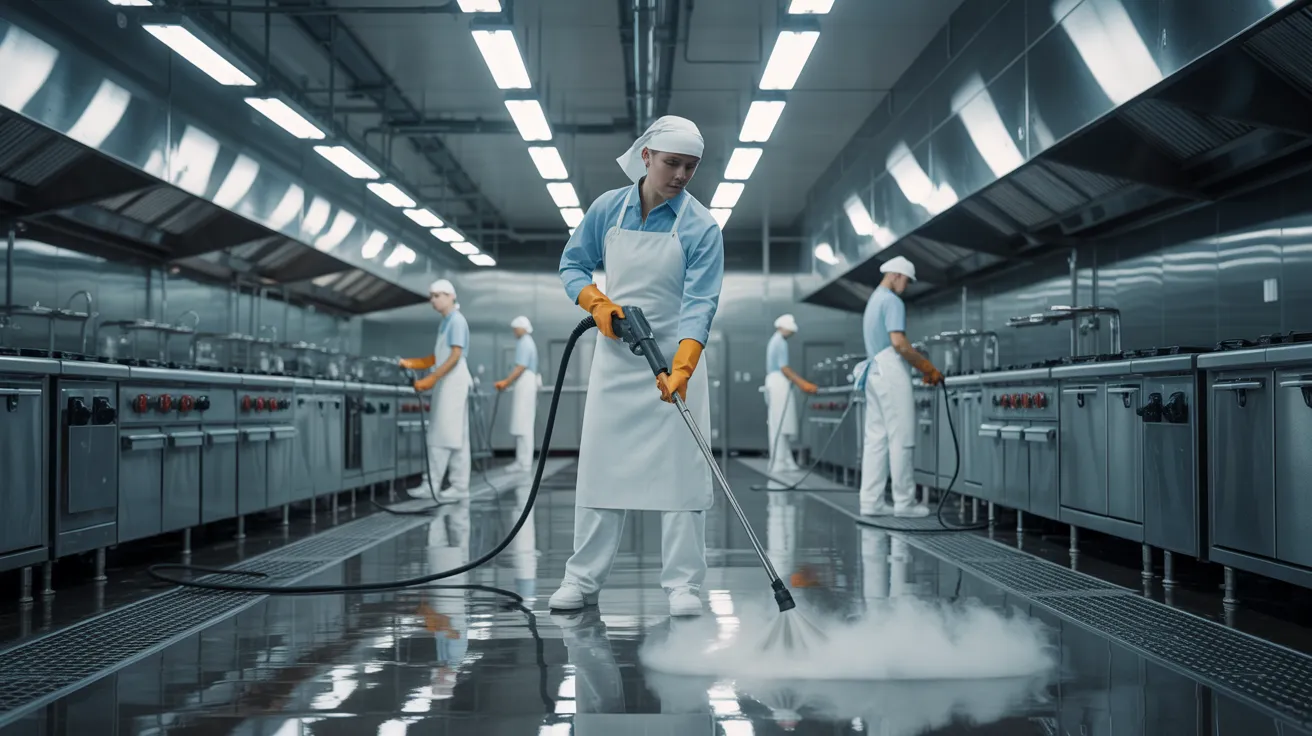
Professional cleaners in Brampton prioritize kitchens, floors, and restrooms given that each location involves specific food safety, falling hazards, and public health requirements. In industrial kitchens, you need grease removal from cooking stations, appliance surfaces, drain systems, preparation areas, and backsplashes to minimize contamination and pest pressure.
Floor care that is documented should also be anticipated. Technicians scrub and extract buildup from tile grout, ceramic surfaces, and vinyl floors, then apply proper moisture management so you can reduce slip incidents and maintain code-compliant conditions. They also address entry points where dampness and dirt enter the building.
Restroom cleaning requires disinfecting touchpoints, fixtures, partitions, dispensers, and waste containers, replacing items and managing smells. They also maintain restaurant cleaning supply rooms where product storage, sink cleanliness, and drain systems impact daily sanitation standards and worker protection.
Food Safety Cleaning Significance for Brampton Businesses
Brampton facilities require food-safe cleaning standards to meet compliance obligations and pass inspections. You also reduce cross-contamination by cleaning and sanitizing food-contact surfaces, equipment, and high-touch areas correctly. Most importantly, you help protect public health by lowering the risk of foodborne illness in your facility.
Regulatory Code Requirements
Food businesses in Brampton face rigorous sanitary regulations, making food safety cleaning crucial to fulfilling health code requirements, defending patrons, and preventing enforcement action. You must maintain hygienic food handling zones, verifiable cleaning logs, proper chemical use, and documented employee protocols that comply with municipal and provincial inspection expectations.
Thorough sanitation supports allergen management by minimizing contaminants on shared equipment and frequently touched surfaces.
Cross-Contamination Prevention
Maintaining health code standards copyrights on your capacity to prevent cross-contamination during daily food handling and cleaning. You need to partition uncooked items from finished dishes, sanitize prep surfaces between tasks, and store chemicals away from food-contact items. Explicit protocols lower contamination threats and reinforce steady regulatory adherence.
Building allergen isolation prevents priority allergens from contacting shared surfaces, containers, or equipment. Utilize dedicated cutting boards, color-coded tools, and strict utensil labeling so staff don't mix items during preparation or service.Enforce handwashing after handling uncooked meats, shellfish, egg items, or allergen substances. Refresh cleaning cloths frequently, and confirm disinfectant efficacy using test strips. When you train staff to follow these controls every shift, you foster a cleaner, more secure operation that meets Brampton's food safety expectations daily.
Public Wellness Defense
If food safety cleaning deteriorates, you don't merely face potential inspection issues—you amplify the risk of foodborne illness affecting customers, staff, and the broader Brampton region. You also undermine your responsibility in safeguarding community wellness, especially in high-traffic food premises where contamination can spread quickly through surfaces, equipment, and touchpoints.
You need sanitation systems that eliminate soils, sanitize effectively, and validate outcomes. This requires following contact periods, using authorized sanitizers, documenting procedures, and educating staff to satisfy health-unit expectations. These measures prevent pathogen control by minimizing pathogens before contaminating food or hands. Throughout Brampton, strong cleaning protects vulnerable communities, reduces outbreak risk, and proves accountability. When you adhere to standards, you go beyond requirements—you lower hazards and facilitate secure food handling region-wide.
In What Ways Does Cleaning Help Achieve Food Safety Compliance?
Maintaining strict sanitation practices promotes food safety compliance by lowering contamination exposure, preventing pathogen multiplication, and keeping your facility meeting sanitation requirements under HACCP-based programs and public health regulations. You verify that food-contact surfaces are visibly clean and microbiologically controlled, enabling documented preventive controls and inspection readiness.
Well-executed cleaning efforts also strengthen allergen management by eliminating residues that can trigger undeclared allergen exposure.
How Should You Plan Commercial Cleaning Services?
Cleaning routines perform optimally when you set them according to risk, production volume, and regulatory requirements rather than using only a fixed calendar alone.
Schedule seasonal deep cleaning for shutdowns, weather-related soil buildup, or pest-pressure periods
What Should You Look For in Brampton Cleaning Experts?
Screen providers initially by their food hygiene standards—not budget alone. You need to confirm that every company meets CFIA, public health, and HACCP-aligned expectations for your operation. Demand proof of insurance, WHMIS compliance, training records, and management systems. Evaluate technician knowledge of contamination dangers, chemical safety, and documented sanitation practices.
You must also evaluate business consistency and oversight. Seek references from Brampton food companies, then assess response times, corrective processes, and communication standards. Ensure the company supports supplier audits and can provide inspection-compliant records when authorities or third parties demand verification. Verify equipment care, colour-coded tools are deployed correctly, and site-specific hazards are understood. A qualified provider protects compliance, product integrity, and your market standing.
What's covered in a Food Safety Cleaning Plan?
Create a documented strategy that defines every sanitation task, standard, and responsibility prior to beginning production. You should document cleaning schedules, authorized products, mixing ratios, exposure periods, equipment, and testing procedures for each zone, surface, and piece of equipment. Be sure to include pre-operational inspections, corrective actions, and employee training requirements.
Your strategy should also focus on contamination prevention controls, waste handling procedures, pest management measures, and written schedules for restrooms, drains, floors, and food-contact areas. Detail how you'll keep raw and ready-to-eat processes separate, facilitate ingredient tracking, and maintain accurate allergen labeling through validated cleaning between product changes. You should assign accountability, maintain signed records, and review results against regulatory standards, HACCP controls, and customer requirements. When gaps appear, modify procedures immediately and instruct staff.
Commonly Asked Questions
Can sanitation providers support nighttime operations in Brampton facilities?
Yes, you can book cleaning services to support nighttime operations in Brampton facilities. You'll coordinate nighttime cleaning around production schedules, security measures, and personnel needs. Services generally map nightshift procedures to minimize interruption, ensure compliance, and document completed tasks. You should verify response times, supervision, lockout procedures, and disposal methods before beginning service. If you operate controlled environments, you'll also need documentation that enable audits and internal quality assurance.
Will sanitation professionals address emergency spills?
Yes, you can locate Brampton cleaning professionals providing hazard containment options. They manage contamination, assess dangers, isolate contamination, and begin swift decontamination to reduce risk and avoid operational impact. You should verify response rates, certifications, safety protocols, and waste procedures. If your facility must meet compliance standards, select a service that tracks incidents, adheres to standards, and supports verification.
Will eco-friendly disinfectants sanitize safely food-contact surfaces?
In essence, green disinfectants remain safe for food preparation areas provided you select solutions certified for food use that satisfy regulatory requirements. Confirm contact duration, concentration levels, and rinse protocols in advance of use. Plant-derived products reduce toxic chemical contact, although you need demonstration of efficacy against relevant pathogens. To preserve residue-free areas, stick to precise manufacturer instructions and validate the cleaning agent meets relevant food safety standards.
Can sanitation programs change with seasonal variations?
Without question, cleaning schedules adjust easily for production fluctuations. Adapt schedules, staffing, sanitizers, and verification steps to fit seasonal patterns while sustaining regulatory adherence. Lower equipment downtime by scheduling sanitization surrounding line changes, peak seasons, and usage patterns. Further modify standard operating procedures, training, and environmental monitoring to reflect seasonal hazards, additional allergens, or elevated soil levels. Regular reviews ensure your schedule current.
Are professional cleaning companies offering staff training on hygiene protocols?
Yes, commercial cleaners often train your staff on hygiene standards. You get employee instruction on correct chemical application, contact times, cross-contamination prevention, machine breakdown, and documentation. They typically align instruction with HACCP, GMP, and CFIA or regional health department regulations. Many also conduct hygiene inspections to verify compliance, spot deficiencies, and strengthen remedial steps. This helps you maintain consistent procedures, succeed in audits, and reduce food safety risks daily.
Summary
Through working with Brampton food safety and commercial cleaning specialists, you accomplish much beyond organizing—you ensure your facility for inspections and your standards meet requirements. From production floors to kitchens, all clean areas and organized zones help prevent pest problems and prevent significant costs. Through booking service on suitable timelines and sticking to a solid cleaning plan, you ensure protection for your team, your patrons, and your good name. In a tightly controlled regulatory landscape, clean conditions cannot be considered optional—they are fundamental to success.
Comments on “Reliable Janitorial Services Brampton”